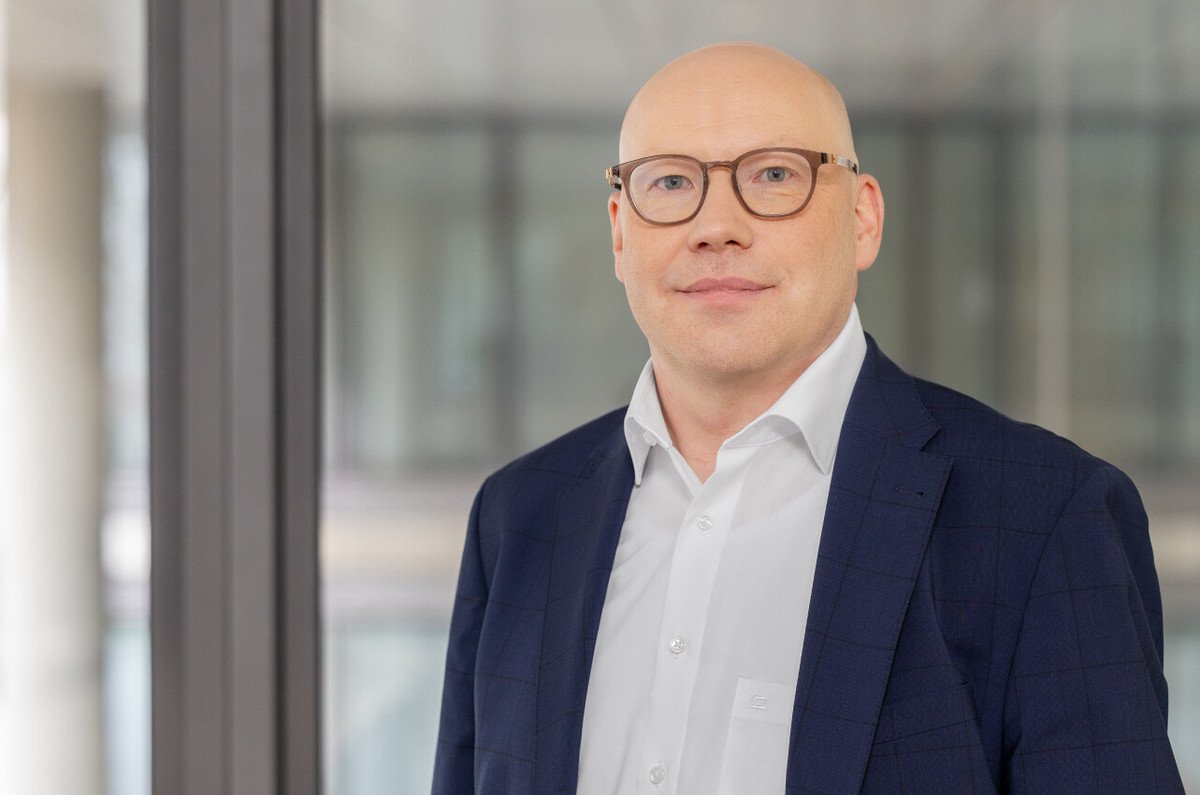
Philippe Müller: “We need to bridge on-chain and off-chain”
What are your priorities as head of digital product and transformation at Clearstream Fund Services?
Philippe Müller. – “We have priorities which I will follow through over the next 12 months. First, we need to scale up the business already in place, meaning the digital products we already have, notably the digital TA part, but also the integration with Vestima. We also have to work on the scaling of these kinds of products, moving away from what was previously done in terms of experimentation on the DLT side, so that we have a scaled-up organization and products around it. That also includes working on the capabilities we need to build out: not only doing mutual funds, but also incorporating money market funds, ALTs, private equity funds, and expanding further into the world of alternative funds.
The second pillar is driving forward interoperability with the rest of the Clearstream business, building bridges between what we have on the DLT infrastructure and the existing Vestima and Clearstream worlds . These are the top two priorities for the months to come.
What are the consequences of the scale-up phase regarding what you have to do?
“Several things are attached to that. When the DLT functionalities started, different avenues were explored. Now, we need to focus on where client demand lies. That demand is particularly strong around the digital TA part. Today, we are processing around 15 billion of tokenized funds on the DLT platform, and we have a huge demand to expand that multiple times over the years to come. We need to ensure that, from both a system and capability perspective, we are ready to handle these volumes. That requires putting focus here and not getting distracted by other use cases or proof-of-concept projects lying around.
The second element, as mentioned, is building the bridge to Vestima. We started building out a product called Vestima Digital this year. As the name suggests, it has two components. One is our traditional Vestima world—the order routing platform through which we take orders from distributors and pass them to transfer agents. We have 260,000 funds processed there; that traditional world goes through Clearstream custody, where clients operate on nominee and omnibus accounts.
At the same time, we identified strong demand from distributors who want to take in private market funds. Historically, these funds were not designed as scaled, off-the-shelf products passing through classical infrastructure pipes. Distributors told us they needed the technical capabilities to handle these assets. By leveraging our DLT infrastructure – which can run a register and provide granular traceability to track flows and holdings – and combining it with our existing setup, we create a powerful solution that provides real value-add to handle these products at scale.
That is the first step launched this year. We continue to onboard customers, and we will build this out further in the year to come, notably to handle closed-ended products. We started processing ALTs and will expand capabilities to include features like capital call processing. While private market funds are the entry point, the bridge we are building between the DLT digital register and Vestima can ultimately serve other asset types as well.
The push is no longer about testing whether a paper concept works in practice, but about putting the technology to work for our advantage to extract tangible benefits.

Philippe Müller, head of digital product and transformation, Clearstream Fund Services
Years ago, when people looked at blockchain, they thought it was science fiction and would remain so. You have worked in this area for years; it must be a fascinating period to see what was once imagined become a reality.
“Absolutely. I have been with Clearstream for over 25 years, working across operations, investment funds, and the core business (Eurobonds and CSD).
Years ago, when we first looked at DLT on the core Clearstream side, it started with working groups imagining on paper how bond issuance could work on DLT, what roles everyone would play, and writing concept papers. That was all theoretical. Then came a period with numerous proof-of-concept projects across funds and other asset classes, but they remained small-scale.
Now, the drive is completely different. The push is no longer about testing whether a paper concept works in practice, but about putting the technology to work for our advantage to extract tangible benefits. It has become much more value-driven and practical for stakeholders.
Another shift is the realization that both worlds exist in parallel and must be combined. We process 15 billion in tokenized funds on DLT, but we manage 5.5 trillion on Vestima and on our core business. The tokenized portion is still small. Even with strong growth, it will take a long time to reach the scale of the traditional world. Stakeholders now realize we need hybrid models that build bridges and ensure interoperability. Clients want to access classical assets via their customary channels while also tapping into tokenized assets and new technology. Ten years ago, the two camps did not really talk to each other; today, that dynamic has changed.
You mentioned interoperability within Clearstream’s infrastructure, but what about interoperability between Clearstream and external systems or providers?
“That is 100% true, and we are addressing it. Clients and stakeholders face the same reality: distributors, transfer agents, and asset managers have often developed their own blockchain networks or DLT platforms. To truly benefit from this technology without fragmenting liquidity, bridges must be built between these different systems, whether private chains or public blockchains.
Clearstream has a long history of establishing standards and leading the way. It is vital to bring players together, establish common standards, and ensure securities can move seamlessly across platforms.
Six months ago, discussing fund tokenization often drew the reaction that technology was ready but demand was absent. Do you see a true acceleration in demand, and will traditional funds ever be entirely tokenized?
“We do see an acceleration, with clear demand both for native issuance on DLT and for tokenizing existing assets. Concrete examples are picking up speed.
A decade ago, people assumed a revolution would happen overnight. The market has experienced a reality check: things do not move that fast, and both worlds will continue to coexist for the foreseeable future. We must provide unified solutions that cater to both. Change will not happen overnight.
Moving to a digital register on a distributed ledger where parties access the same record automates processes, eliminates reconciliations, and significantly accelerates securities processing.
Philippe Müller, head of digital product and transformation, Clearstream Fund Services
From an investor perspective, can you demonstrate clear value in terms of speed, cost, and simplicity?
“As a market infrastructure provider, we do not have direct exposure to end-investors; we interact with distributors, asset servicers, and asset managers. They are best placed to assess that direct benefit.
However, we know the custody chain is traditionally very long—from the investor’s bank to custodians, global custodians, domestic CSDs, ICSDs, transfer agents, and asset managers. Passing data sequentially through that chain creates numerous opportunities for reconciliation breaks and requires substantial manual effort to resolve.
Moving to a digital register on a distributed ledger where parties access the same record automates processes, eliminates reconciliations, and significantly accelerates securities processing. This also aligns with the broader push toward longer operating hours and shorter settlement cycles.
Do institutional and retail investors share the same appetite?
“There is a distinction. Institutional investors see the efficiency gains clearly and demand them. Retail investors may take longer, but a growing base of digital-native investors will naturally demand these same efficiencies as generations shift.
Regarding the integration of FundsDLT, where do you stand today and what challenges remain?
“DLT is already an integral part of our product offering, both this year and last, following our earlier roadmap. It is integrated into Clearstream’s offering to serve various client needs, whether through classical Vestima or digital TA services. We continue to advance this integration between DLT and our classical platforms.
Does Clearstream continue to monitor fintechs and startups to identify new technological components?
“We are forward-looking and continuously keep our eyes and ears open to new technologies and emerging market ideas.
In private markets, which barriers can you realistically lower, and what limitations remain, particularly regarding liquidity?
“In fund services, we observe two major trends: a shift from active to passive management, and a growing appetite for private market funds. The latter is driven by asset managers seeking new distribution channels and by funding needs for the energy transition, climate initiatives, and defense.
Traditionally, private market funds were handled bilaterally and contractually with institutional or ultra-high-net-worth investors. When targeting broader distribution, distributors require these products to run through their existing infrastructure pipes; they cannot afford separate, manual legacy processes.
Distributors approached us because they already rely on Vestima for order routing and Clearstream for custody. Private market assets carry extra complexity, such as granular tracking of individual investments, flows, and capital calls. With Vestima Digital, we use a DLT digital register to track flows and investor positions while connecting back to existing distribution channels. Distributors process volumes through familiar pipes, while DLT handles the granular reporting and processing. Asset managers (GPs) gain access to broader distribution networks and additional liquidity while maintaining full transparency.
Does Vestima Digital cover all needs, or are there areas you cannot fulfill yet?
“Private markets are the fastest-growing fund segment. Vestima Digital solves order routing and provides transparency and transaction tracking.
However, it does not solve everything. For example, secondary market trading for private funds is not on our immediate roadmap, although other players are exploring it. As a market infrastructure, our core objective is delivering scalable solutions that process significant volumes. There is room for niche solutions alongside us, and we will adapt as the market evolves.
Luxembourg has advanced its legal framework with Blockchain Laws 1 through 4 and new rules for control and transfer agents. What regulatory, technical, or commercial barriers still hinder scale adoption?
“We welcome Blockchain Law 4 and the clarifications regarding control agents and tokenization. The main remaining challenge across DLT and tokenization is cash on chain. Various solutions are being tested in the US and Europe. Cash on chain is the missing piece required to scale the business fully, and we are actively working on this alongside our Clearstream colleagues.
Is the question of sovereignty a priority for you as a solution provider?
“We act based on client demand. We operate an open system. In our classical business, we cater to 55 markets across fund services, and our DLT offering already covers 10 markets. We cannot design a solution that only functions in a single region like Europe; our infrastructure must adapt globally.
Looking ahead to the upcoming Fund Summit, what can attendees expect to learn?
“We have a dedicated panel on tokenization touching upon these themes. An asset manager will share insights on institutional versus retail demand drivers, an asset servicer will discuss interoperability between traditional and future systems, and we will contrast developments in the US versus Europe. We will also provide updates on Vestima Digital. It will offer a thorough update on the current state of DLT.
In 12 months, what KPI would define success for you?
“First, scaling the volumes processed on DLT beyond the current 15 billion. You can evaluate us on whether that volume has grown in a year.
Second, capability expansion: assess where we stand with money market funds and private equity funds, and verify whether the interoperability bridge through Vestima Digital is fully operational in production.
To make what you do accessible to an outside audience, how would you explain your role?
“I would look at it through the lens of my daughter. She would not understand the concept of visiting a physical bank branch to deposit cash and ask for investment advice; her entire world operates through a smartphone.
What I do is help drive the trajectory toward a digital world and guide that transformation. The goal is to ensure people benefit from the strengths of the established financial system while interacting with it seamlessly as digital natives.”

