
Brazil’s CVM Launches Task Force to Deliver Tokenization Proposal Within 60 Days — BigGo Finance
Key Elements
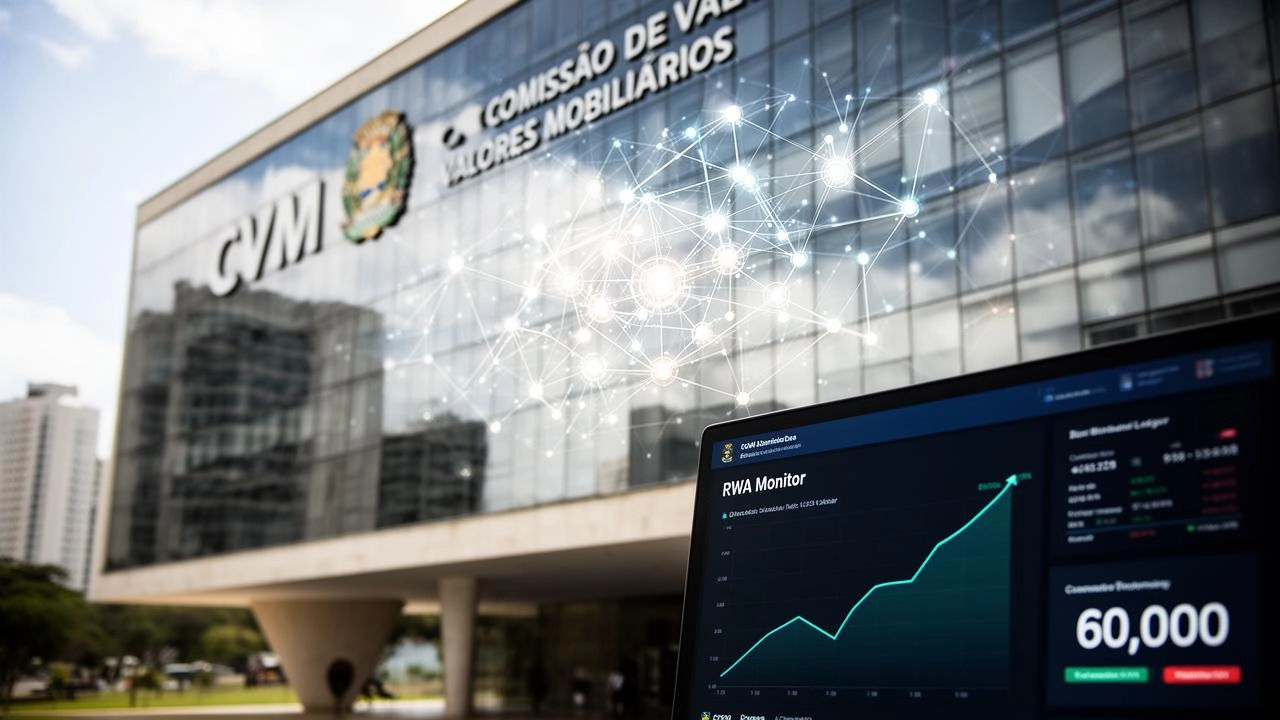
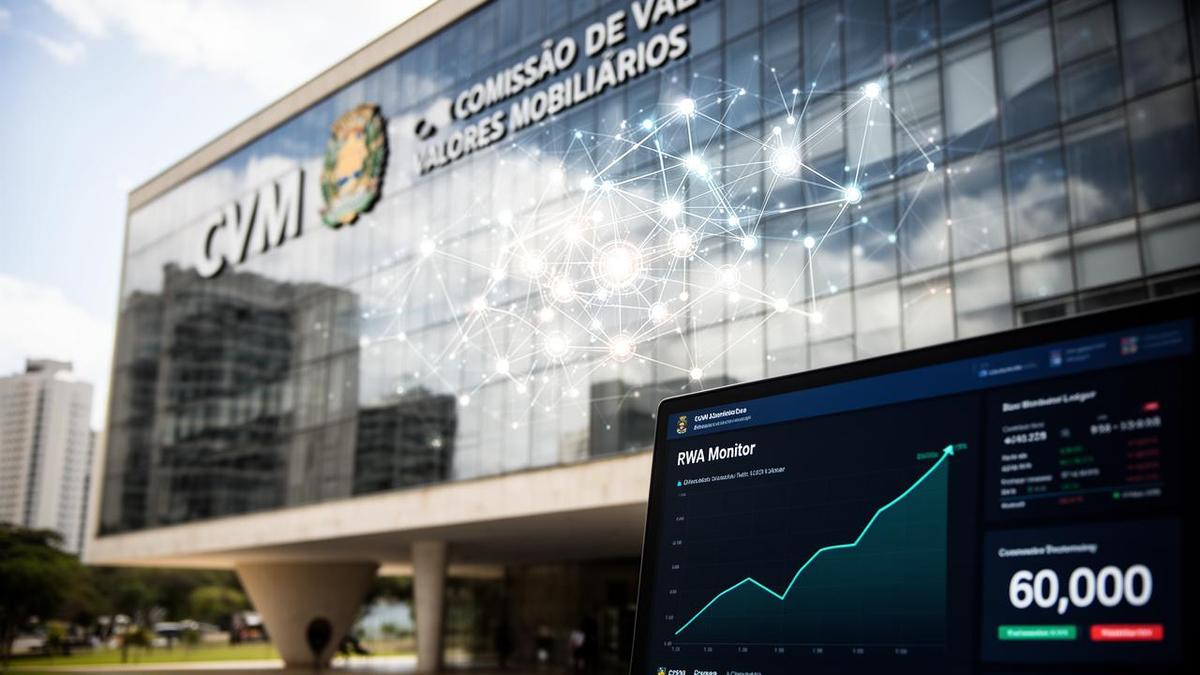
Brazil’s securities watchdog has triggered a critical sprint to regulate the burgeoning tokenized asset market, assembling a 14-department task force to deliver a formal proposal within 60 days. The Comissão de Valores Mobiliários (CVM) announced that the experimental framework will target the registration, custody, trading, and settlement of securities using distributed ledger technology (DLT), placing the country at the forefront of formalizing blockchain-based capital markets in Latin America.
The move comes as Brazil’s real-world asset (RWA) market balloons to roughly 12 billion reais, or approximately $2.34 billion. With debentures and commercial notes alone accounting for about $1.3 billion of that total, the regulator is moving to clarify liability and operational standards before the infrastructure scales further. The task force is required to submit its initial blueprint to the CVM board within 60 days of its formal installation, while a broader regulatory review will continue for 120 days, with a possible 30-day extension.
A Framework for a Converged Market Structure
Unlike traditional securities infrastructure, where exchanges, custodians, registrars, depositories, and settlement systems operate as distinct entities, distributed ledgers can consolidate these functions onto a single platform. This convergence is precisely what concerns the CVM. The regulator stated that the review will examine who maintains the official ownership record, how private keys are held in custody, the rules governing transaction reversals, and the assignment of liability when platforms experience operational failures.
The task force is empowered to consult government agencies, market associations, self-regulatory bodies, and outside specialists. It will also assess cybersecurity threats and study regulatory approaches adopted in foreign jurisdictions. The CVM confirmed it will draw heavily on evidence gathered from its prior regulatory sandbox experiments, which tested blockchain-based issuance and secondary trading. Those trials scrutinized operational controls and practical risks, and their findings are expected to anchor the new framework.
“The CVM previously tested blockchain issuance and secondary trading. Those trials examined operations, controls, and practical risks. Their findings will support Brazil’s experimental framework,” the regulator noted.
Classification Remains Unchanged, Services Under Scrutiny
The CVM’s 2022 guidance already established that a token’s classification as a security depends on its economic characteristics, not the technology used to issue it. That principle remains intact. The current review is not rewriting the definition of a security but rather constructing the regulatory plumbing for the services surrounding tokenized securities.
According to data from the Brazilian tracking platform RWA Monitor, the market has grown to a size that demands formal oversight. The table below summarizes the key milestones and timelines for the CVM’s tokenization initiative:
| Regulatory Milestone | Timeline |
|---|---|
| Task Force Installation | Formal installation date triggers deadlines |
| Initial Proposal Submission | Within 60 days of installation |
| Broader Regulatory Review Period | 120 days (extendable by 30 days) |
| Total Potential Review Window | Up to 150 days |
Market Growth Drives Regulatory Urgency
The push for rules comes as tokenized debentures and commercial notes gain traction among Brazilian issuers and investors. The ability to fractionalize assets and streamline settlement has attracted capital, but it has also blurred the lines of accountability. Distributed systems can alter how ownership is recorded and how transactions are processed, creating gaps in existing securities law that the CVM aims to close.
The regulator’s experimental framework is expected to assign clear duties across connected activities, ensuring that a single platform handling multiple functions does not operate in a regulatory vacuum. By mapping out responsibilities for private-key management, ownership ledgers, and system outages, the CVM hopes to provide legal certainty without stifling innovation.
Industry participants will be watching closely as the 60-day clock starts ticking. The proposal’s contents will signal how aggressively Brazil intends to regulate a market that, at $2.34 billion, is still modest by global standards but growing rapidly. The CVM’s willingness to consult international models and sandbox data suggests a pragmatic approach, but the tight deadline leaves little room for delay in a sector where technology evolves faster than legislation.
Once added, BigGo Finance appears first in Google Search Top Stories, so you get the broadest, most up-to-the-minute, and most comprehensive global financial news first.

